In today's industrial landscape, the demand for robust and reliable electrical systems has never been higher. At the forefront of this revolution are fire resistant cable manufacturers, who play a crucial role in ensuring the safety and efficiency of modern industrial operations. The H07V-U cable, a prime example of advanced fire-resistant technology, has become increasingly popular for its ability to withstand high temperatures and prevent flame propagation. As industries continue to evolve, the importance of these specialized cables in mitigating fire risks and maintaining operational continuity cannot be overstated.
Table of contents:
Fire Resistant Cables in High-Temperature Industrial Applications
Compliance with International Standards: A Guide for Industrial Cable Buyers
Risk Mitigation Strategies: Implementing Fire Resistant Cables in Manufacturing
Future-Proofing Industrial Electrical Systems with Advanced Fire Resistant Cables
The H07V-U cable, designed for fixed installations in electrical equipment and lighting devices, exemplifies the cutting-edge solutions offered by fire resistant cable manufacturers. With a maximum conductor temperature of 90°C during normal use, these cables are engineered to perform reliably in high-heat environments. The solid bare copper stranded conductor, coupled with PVC TI3 insulation, ensures excellent electrical conductivity while maintaining superior fire-resistant properties. For industries dealing with extreme temperatures or potential fire hazards, the integration of such cables is not just a safety measure but a critical operational necessity.
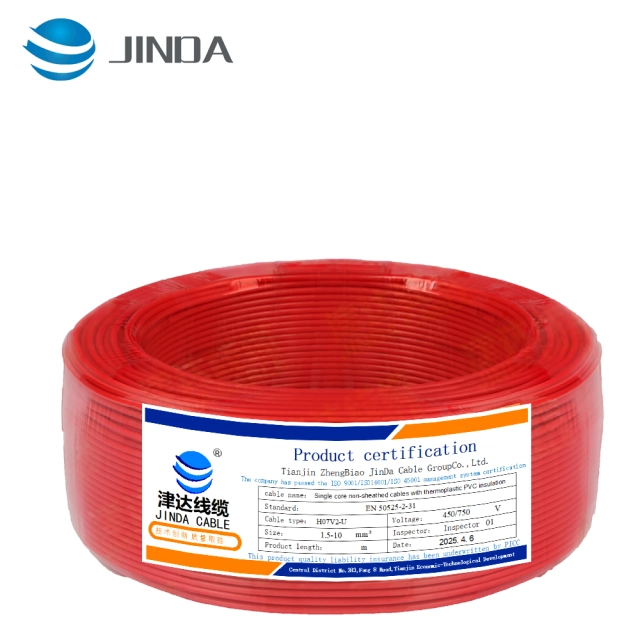
When sourcing fire resistant cables wholesale, compliance with international standards is paramount. The H07V-U cable adheres to various stringent norms, including HD 21.7 S2, VDE-0281 Part 7, and CEI20-20/7. This compliance ensures that the cables meet global safety requirements, making them suitable for use across different geographical regions. For industrial buyers, understanding these standards is crucial when selecting cables for their operations. Fire resistant cable manufacturers, like Jinda Cable, prioritize these certifications, offering products that not only meet but often exceed regulatory requirements, providing peace of mind to end-users.
Implementing fire resistant cables in manufacturing environments is a key strategy in comprehensive risk mitigation plans. The H07V-U cable's flame retardant properties, certified under IEC 60332.1, make it an ideal choice for areas where fire safety is critical. Fire resistant cable manufacturers have developed these cables to limit flame propagation, potentially containing fires and allowing for crucial evacuation time in emergency situations. When sourcing fire resistant cables wholesale, industries should consider not just the immediate cost but the long-term benefits in terms of safety and potential damage prevention.
As industries continue to advance, the role of fire resistant cables in future-proofing electrical systems becomes increasingly significant. Fire resistant cable manufacturers are at the forefront of innovation, constantly improving their products to meet evolving industrial needs. The H07V-U cable, with its versatility in sizes ranging from 1 x 0.5 mm² to 1 x 10 mm², demonstrates the adaptability required in modern industrial settings. By investing in these advanced cables, industries not only comply with current safety standards but also prepare for future regulatory changes and technological advancements in fire safety.
The evolution of fire safety in industrial settings has been significantly influenced by advancements in cable technology. Fire resistant cable manufacturers have played a pivotal role in this progression, developing products like the H07V-U cable that combine high performance with crucial safety features. As industries continue to prioritize fire safety and operational efficiency, the demand for fire resistant cables wholesale is expected to grow. By choosing certified, high-quality cables from reputable manufacturers, industries can ensure the safety of their operations, comply with international standards, and prepare for the challenges of tomorrow's industrial landscape.


